How to Play Spanish 21 is easy to pick up if you already know blackjack: beat the dealer without going over 21. The twist? Spanish 21 removes all the 10s from the deck and adds special rules and bonus payouts.
At iWild Casino, this guide focuses on what makes Spanish 21 different. You’ll learn how its bonuses work, what to expect from the Match the Dealer side bet, and how the game’s odds compare with blackjack.
Spanish 21 Explained for Blackjack Players
If you know blackjack, Spanish 21 will feel familiar: you still aim to beat the dealer without going over 21. Your usual habits, checking your total, watching the dealer’s upcard, and choosing whether to hit or stand, are still useful.
The game does have its own rules, so take a moment to learn them before you play. New to online casinos? You can also look into casino bonus promotions to understand what offers may be available, and always check their terms.
No 10s: The Deck Behind Spanish 21
The blackjack card values you already know still apply: number cards keep their face value, face cards count as 10, and an ace can count as 1 or 11. The big change is that Spanish 21 removes every 10 cards from the deck.
That means fewer 10-value cards are in play, which affects how hands are formed. A natural blackjack, an ace plus a 10-value card, is still possible with a face card, but it may be less common because the 10s are gone.
Spanish 21 Objective and How a Hand Is Won
The aim is simple: finish closer to 21 than the dealer without busting. Go over 21 and you lose; beat the dealer’s total and you win. If neither of you busts and your totals match, the hand is usually a push.
Here’s the twist: Spanish 21 may pay certain 21s as bonus hands, and a player’s 21 can beat the dealer’s 21 under some rules. So a winning hand may pay differently than you expect, check the table’s paytable before you play.
Walking Through One Hand of Spanish 21
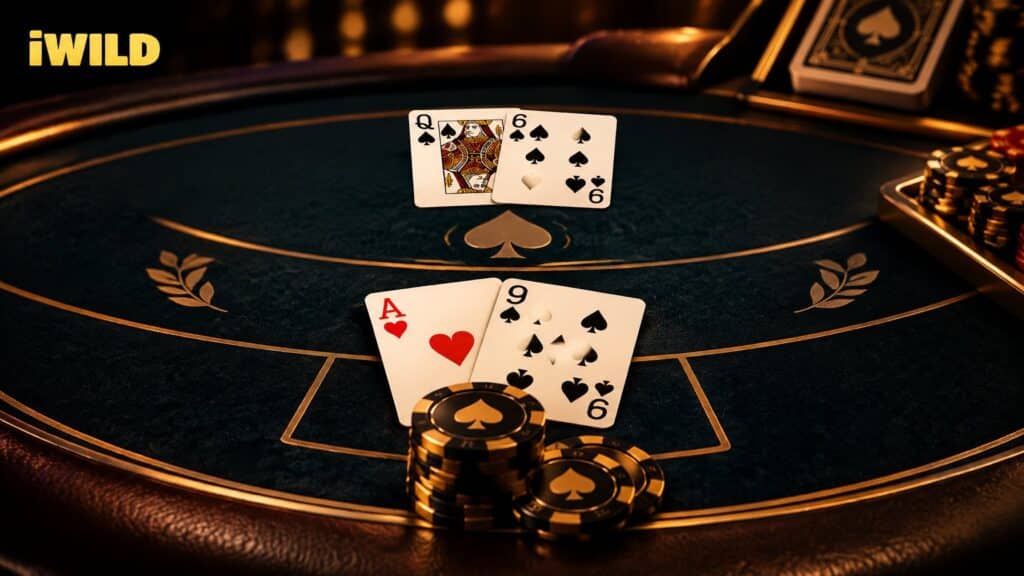
Here’s a typical hand, with the familiar blackjack moments—and the Spanish 21 twist at each step:
- Place your bet: Same as blackjack. Set your wager before the cards are dealt.
- Get your cards: Familiar deal, different deck. You receive two cards, but the deck has no 10s.
- Choose your move: Much like blackjack. Hit, stand, double, split, or surrender if the table allows it.
- Dealer plays: Same basic idea. The dealer follows the table’s fixed drawing rules.
- Settle up: Check for Spanish 21 bonuses. Your total is compared with the dealer’s, and qualifying hands may earn extra.
Want to browse other options? Explore our casino game library and check each game’s rules before you play.
Familiar Moves, Familiar Insurance
Hitting, standing, doubling, and splitting work much like they do in blackjack, depending on the table rules. Insurance is also offered at some Spanish 21 tables when the dealer shows an ace; it’s a separate side wager, and its terms can vary.
Check the rules before taking it. When you’re ready, you can log in to iWild Casino to explore the site.
Bonus 21s and Their Payouts
Spanish 21 can reward certain hands with more than the usual even-money payout. The exact bonus schedule varies by table, so use the paytable in front of you, not a payout chart from another casino.
Longer hands and suited combinations are generally less common than ordinary 21s, but their precise chances depend on the number of decks and the table rules. Without those details, it would be misleading to attach reliable probabilities to each hand.
Think of the bonuses as a fun extra, not a reason to expect a particular result. Their larger, tiered payouts may remind you of features in online slot games, though the games work very differently.
| Bonus Hand | Pays | Notes |
| 5-card 21 | 3:2 | Hand totals 21 with five cards |
| 6-card 21 | 2:1 | Hand totals 21 with six cards |
| 7+ card 21 | 3:1 | Hand totals 21 with seven or more cards |
| 6-7-8 mixed suits | 3:2 | Three cards in different suits |
| 6-7-8 suited | 2:1 | All three cards share a suit |
| 6-7-8 spades | 3:1 | All three cards are spades |
| 7-7-7 mixed suits | 3:2 | Three sevens in different suits |
| 7-7-7 suited | 2:1 | Three sevens in the same suit |
| 7-7-7 spades | 3:1 | All three cards are spades |
Super Bonus: What You Need to Hold
The Super Bonus is a special award, not just another 21 bonus. In common Spanish 21 rule sheets, you must make a 7-7-7 hand, while the dealer must also have a 7 showing. The exact suit combination can affect the payout, and some tables attach an additional award when other players have qualifying hands.
Check the table’s paytable for the precise requirements: unlike card-count or 6-7-8 bonuses, the Super Bonus depends on the dealer’s upcard too.
Envy Bonus: Who Gets Paid and When
With an Envy Bonus, another player at the table may receive a set award when you land a qualifying hand, usually a specified 7-7-7 combination. The qualifying hand’s owner gets the main bonus; eligible neighbors get the Envy payment.
Rule sheets from different casinos list different amounts, so check the table rules before betting.
The Rules That Set Spanish 21 Apart
If you’re coming from blackjack, keep the familiar basics—but be ready to adjust a few assumptions. Spanish 21’s player-friendly options can change how you handle a hand, while payouts and restrictions depend on the table. Here are the rules worth checking before you play.
Your Blackjack Against the Dealer’s
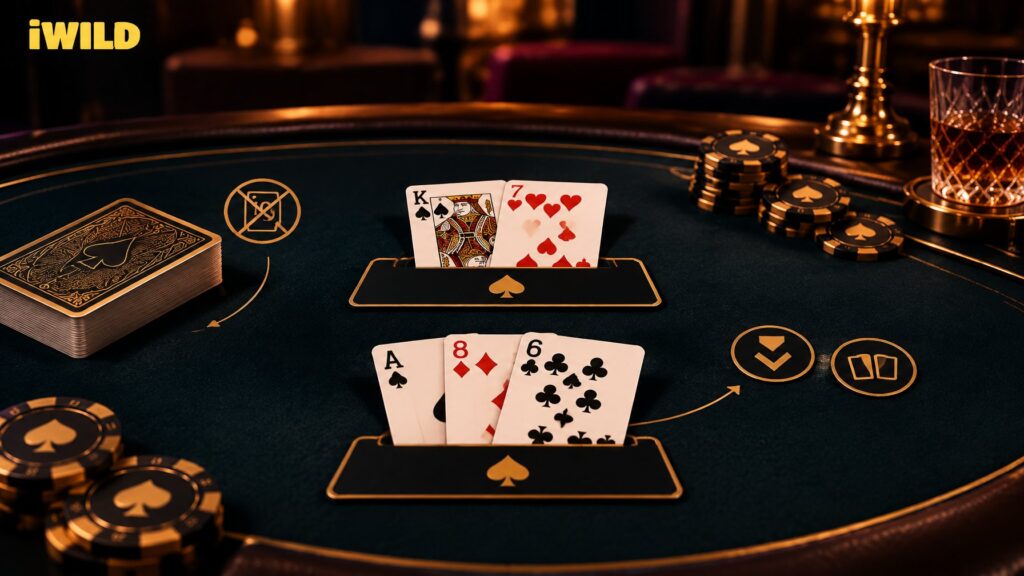
In standard blackjack, a natural blackjack—an ace and a 10-value card in the first two cards, often pays 3:2, though some tables pay 6:5. In Spanish 21, a natural blackjack commonly pays even money, or 1:1, while certain other 21s may qualify for bonuses.
A tie between ordinary hands is usually a push in both games. But don’t assume every 21 ties: Spanish 21 commonly lets a player’s 21 beat the dealer’s 21. Check the table’s rules for the exact wording and payouts.
Player 21 and the Tie Question
In standard blackjack, when you and the dealer finish with the same total—including 21—the result is normally a push, unless one hand is a natural blackjack and the other is not. That means neither side wins the main bet on an ordinary tie.
Spanish 21 often changes this: a player’s 21 beats the dealer’s 21, so it isn’t treated as a push. However, rule sheets may describe this differently, and bonus-hand conditions can add detail. Read the table rules before you play.
Splitting: What Carries Over From Blackjack
The familiar idea still applies: when your first two cards form a pair, you may be able to split them into two hands by placing another bet. The exact pairs you can split, and how many times you can resplit, depend on the table.
Pay special attention to split aces. Many Spanish 21 games allow aces to be resplit, but a one-card limit or other restriction may apply. A hand made after splitting may also be treated differently from a natural blackjack for payout purposes. Check the rules before splitting.
Doubling Down, Spanish 21 Style
In blackjack, doubling is often restricted to certain starting totals. Spanish 21 may let you double on any initial hand total, including after splitting—but these options aren’t guaranteed at every table. You generally add a wager equal to your original bet and receive one more card.
A doubled hand can still qualify for a bonus if it meets that table’s definition of a bonus hand. But payouts and eligibility rules vary. Check whether bonuses apply after doubling or splitting before counting on an extra award.
Double Down Rescue, Explained
Some Spanish 21 tables offer “double down rescue,” a way to reduce the sting of a doubled hand. After doubling and receiving your one additional card, you may be allowed to surrender the hand and give up the doubled portion of your wager.
In other words, the rescue typically forfeits the extra amount you added, while your original bet remains in play. The option is table-specific and may have timing restrictions, so check the rules before using it.
Surrender: What’s Allowed and When
Spanish 21 commonly offers late surrender: after the dealer checks for blackjack, you can fold and lose half your original wager. Some tables also allow surrender after doubling, often called double down rescue. That’s not universal, though, so check whether it’s offered and when you can use it.
The Match the Dealer Side Bet, Decoded
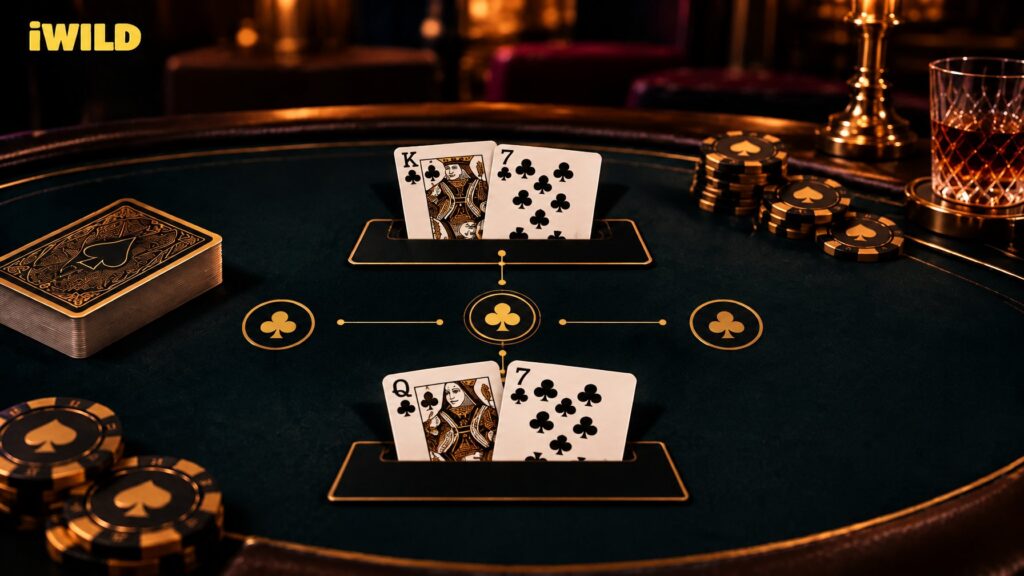
Want an extra side wager to track while the main hand plays? Match the Dealer pays when either of your first two cards matches the dealer’s upcard by rank. For example, your king may match the dealer’s king, with a suited match sometimes earning a bigger payout.
The Match the Dealer bet has its own limits, set by the casino. Check the table for the minimum, maximum, and payout details before placing it. It won’t change your main hand, just adds a separate chance to win.
Match Payouts and Why They Differ
Match the Dealer payouts aren’t universal: casinos set their own paytables, and the number of decks and matching-card combinations can affect the odds.
Before placing this side bet, compare the listed rewards, not just the biggest one, and check the limits. Below are the listed payouts by Rivers Casino Philadelphia.
| Match Type | Pays | Casino Source |
| 1 non-suited match | 3:1 | Rivers Casino Philadelphia |
| 2 non-suited matches | 6:1 | Rivers Casino Philadelphia |
| 1 suited match | 2:1 | Rivers Casino Philadelphia |
| 1 non-suited and 1 suited match | 15:1 | Rivers Casino Philadelphia |
| 2 suited matches | 24:1 | Rivers Casino Philadelphia |
Strategy: Adjusting From Blackjack Habits
Your blackjack instincts are useful, but don’t follow a standard blackjack chart without checking the Spanish 21 rules. The missing 10s change the deck’s makeup, while options such as late surrender, doubling after a split, and player 21 beating dealer 21 can affect the best move.
Instead, start with a strategy chart made for the exact Spanish 21 rules you’re playing. Check how the table handles doubling, splitting aces, surrender, and soft 17 before making decisions. Bonus hands are exciting, but don’t chase them by ignoring the stronger basic play.
Enjoy learning how decisions shape other table games, too? A baccarat strategy guide can help you explore a different kind of game, where the choices and rules are quite different from Spanish 21.
Spanish 21 Table Etiquette Basics
At a live table, place your bet before the deal, make your actions clear, and follow the dealer’s instructions. Avoid touching cards unless the table allows it, and ask questions between hands if a rule is unclear.
On a digital or live-streamed table, use the on-screen buttons and act before the timer runs out. Keep your bets within the displayed limits, and give the dealer time to finish each step. A little patience keeps the game smooth for everyone.
Not Every Spanish 21 Table Is the Same
Learned Spanish 21 at one casino? Don’t assume the next table uses identical rules. Published rules show why it pays to check: Rivers lists Match the Dealer payouts and bet limits, while the Seneca and Blue Lake pages don’t mention that side bet. Seneca and Rivers describe Double Down Rescue; Blue Lake says surrender after doubling is possible.
Even insurance and bonus payouts may be presented differently, so read the table’s own rules before playing.
| Rule | Seneca Buffalo Creek Casino | Blue Lake Casino | Rivers Casino Philadelphia |
| Match the Dealer payouts | Not listed | Not listed | 3:1, 6:1, 12:1, 15:1 and 24:1, depending on matches |
| Match the Dealer bet limits | Not listed | Not listed | $1 minimum; up to the main wager, with a $500 maximum |
| Double Down Rescue offered | Yes; recover the doubled portion and forfeit the original wager | Not listed | Yes; take back the doubled portion and forfeit the original wager |
| Insurance offered | Not listed | Yes; described when the dealer shows an ace | Yes; up to half the original wager when dealer shows an ace |
| Surrender terms | Not listed | Late surrender described; half the bet is forfeited | Surrender half the wager on the first two cards; dealer blackjack may affect the loss |
| Bonus payout differences | General note: 21 against dealer’s 21 can pay up to 3:1 | Lists 5-card, 6-card, 7+ card 21, 6-7-8 and 7-7-7 bonuses | 5-card 21: 3:2; 6-card: 2:1; 7+ cards: 3:1; 6-7-8 and 7-7-7 bonuses, plus Super Bonus and Envy Bonus |
Comparing the House Edge of Both Games
To compare Spanish 21 with blackjack fairly, line up the rules first: use the same number of decks and check whether the dealer hits or stands on soft 17. Also compare payouts, surrender, doubling, and splitting rules, since each can shift the house edge.
Wizard of Odds reports Spanish 21 house edges of 0.40% when the dealer stands on soft 17, 0.42% when the dealer hits soft 17 and redoubling is allowed, and 0.76% when the dealer hits soft 17 without redoubling.
These figures exclude the Super Bonus. Blackjack has no single standard edge; its value depends on the table rules and strategy.
| Game | Rule Set Assumed | House Edge | Source |
| Spanish 21 | Dealer stands on soft 17 | About 0.40% | Wizard of Odds |
| Spanish 21 (alternate rule set) | Dealer hits soft 17; redoubling allowed | About 0.42% | Wizard of Odds |
| Standard blackjack | Six decks; dealer stands on soft 17; 3:2 natural; optimal strategy | About 0.4% | Wizard of Odds |
Spanish 21: Frequently Asked
A Spanish 21 deck has no 10 cards. The usual card values still apply: face cards count as 10, aces count as 1 or 11, and number cards keep their value. Removing the 10s changes which combinations are available and how often hands reach certain totals.
Usually, you can’t surrender a hand after splitting. Many tables only allow late surrender on your original first two cards, and rules vary by casino. Check the table’s rules: surrender is typically unavailable once you’ve split or taken another card.
No. If you know blackjack, the basics will feel familiar. You still aim to beat the dealer without busting, but Spanish 21 adds special bonuses and rule variations. Beginners can learn it step by step, though they should check the table rules before betting.
The Super Bonus is an extra payout for a qualifying 7-7-7 hand, often when the dealer also shows a 7. The precise hand requirements and award are set by the casino, so they vary. Check the paytable to see which suits qualify.
Card counting rarely offers a practical advantage in online Spanish 21. In many digital games, cards are shuffled frequently or dealt from a continuous-shuffle system, limiting useful tracking. Wizard of Odds explains how shuffle methods affect counting potential.